Chemistry · Fun facts
Why do baking soda and vinegar fizz?
Baking soda meets vinegar. Bubbles appear. A tiny chemical reaction makes a big entrance.
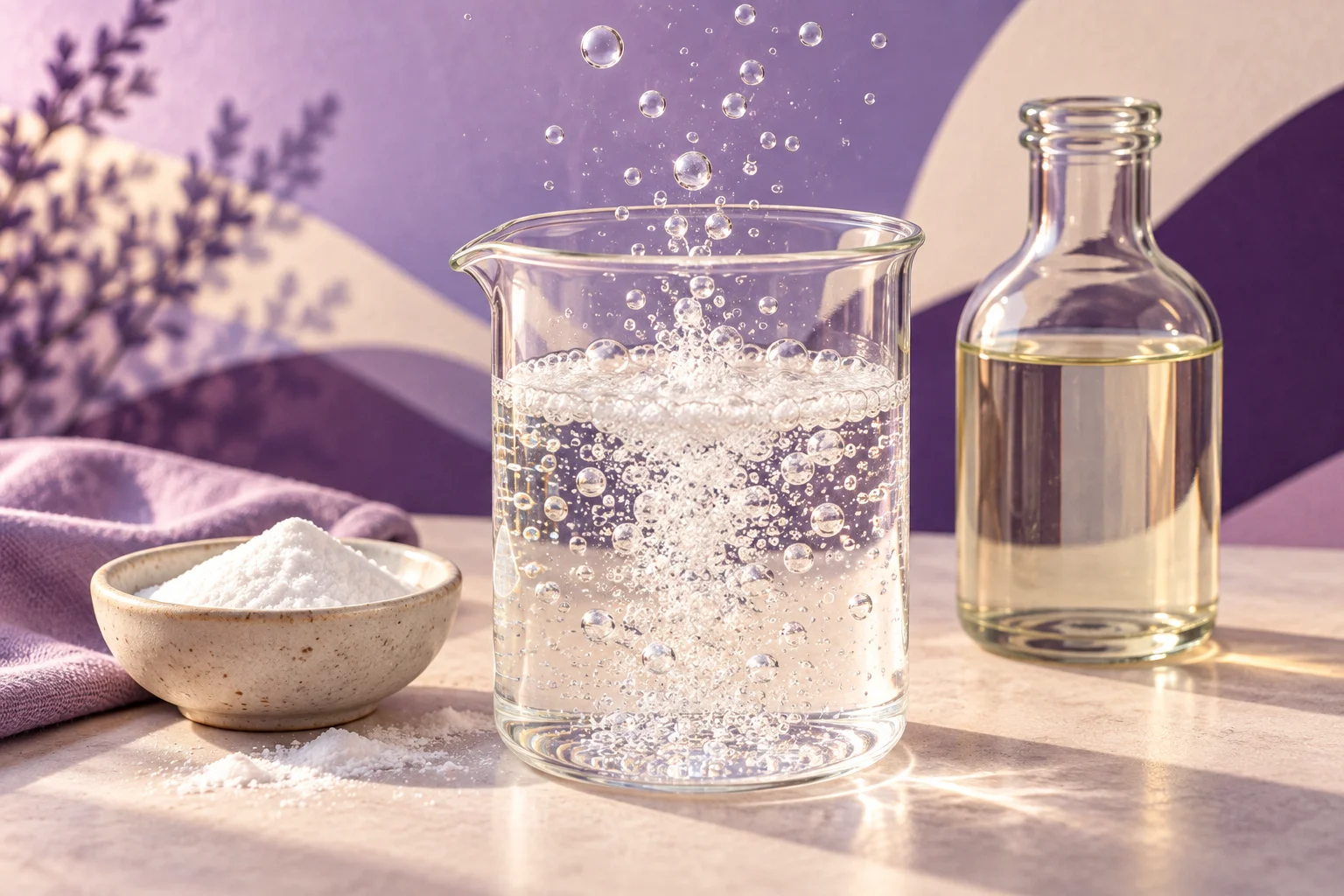
That familiar classroom fizz is more than a dramatic effect. It is a clue that new substances are being formed.
A new gas joins the scene
Baking soda is sodium bicarbonate. Vinegar contains acetic acid dissolved in water. When they react, they produce carbon dioxide gas, along with water and sodium acetate. The escaping gas makes the mixture bubble.
Bubbles with a limit
The fizz cannot last forever. Once one reactant is used up, the reaction stops. Adding more baking soda will not keep producing gas if there is no acid left to react with it. Both ingredients matter.
Foam is a bubble keeper
Dish soap can trap the gas in bubbles, making foam that lasts longer. The soap is not the source of the carbon dioxide; it helps us see the gas produced by the reaction.
Keep your curiosity—and your goggles
Want to explore? Follow the linked American Chemical Society activity with adult supervision and eye protection. Do not taste the materials. Keep the reaction in an open container: gas needs room to escape.
A thought to take with youWill adding endless baking soda create endless bubbles?Tap to reveal the answer
No. Once the acid is used up, extra baking soda cannot keep this reaction going by itself.
Keep your curiosity going
Explore the science behind this story.