Biology · Fun facts
Why do leaves change colour?
Some of a leaf’s brightest colours are hiding in plain sight. Meet the pigments behind them.
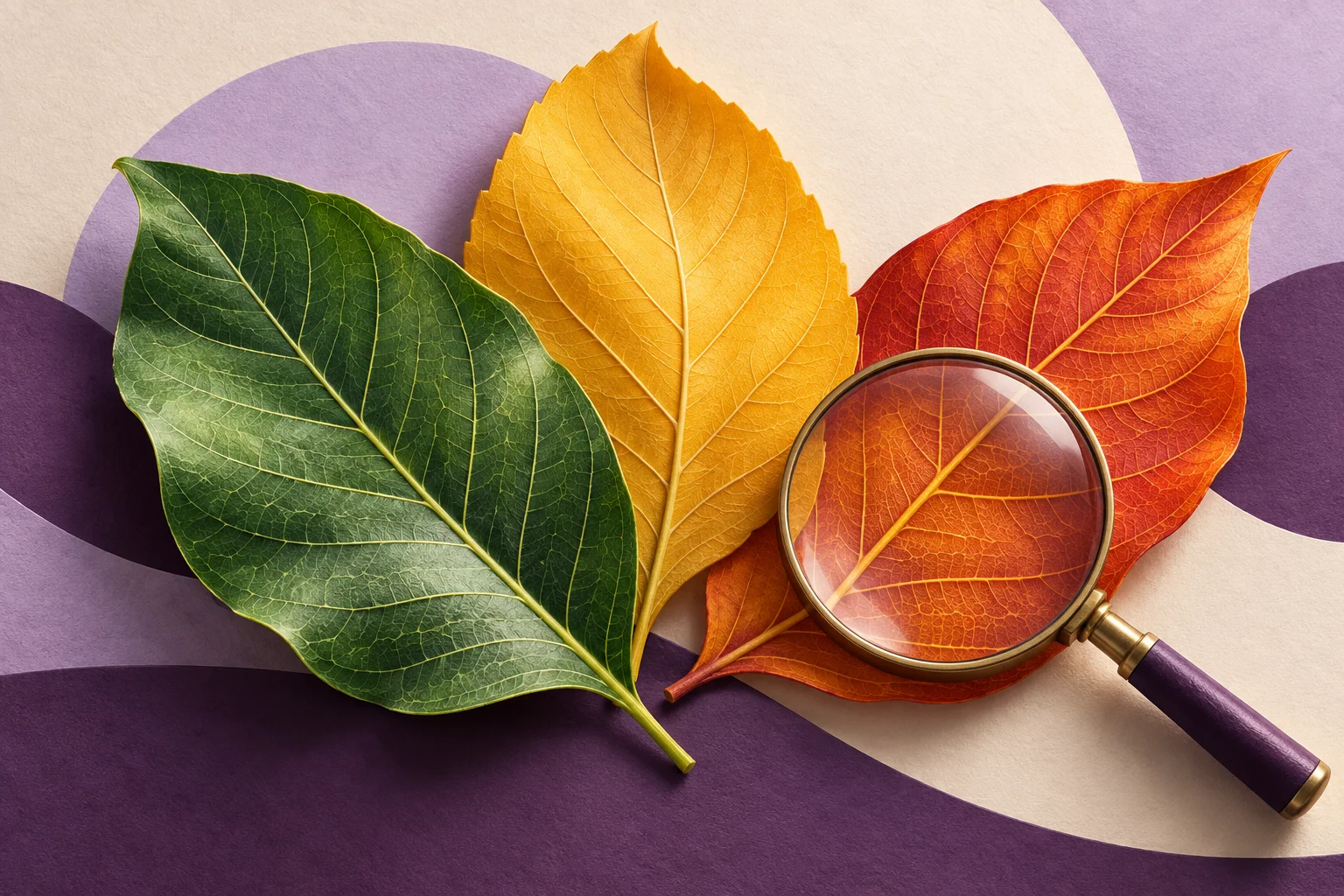
A green leaf is not just green. Inside it are pigments—molecules that interact with light—and some of them only get their moment in the spotlight later.
Meet the green star
Chlorophyll gives leaves their familiar green colour and helps plants use light to make sugars through photosynthesis. When there is plenty of chlorophyll, its strong green appearance can mask other pigments in the leaf.
The colours behind the curtain
Carotenoids produce yellow, gold and orange colours. In many leaves, these pigments are already present while the leaf looks green. As chlorophyll breaks down, those other colours become easier to see. Carotene is also a pigment behind the orange colour of carrots.
What about red and purple?
Red and purple colours involve another group of pigments called anthocyanins. A leaf’s final appearance depends on its mix of pigments, as well as the species and conditions around it. Not every colour change has exactly the same story.
A seasonal story—not a rule for every tree
In many deciduous trees in regions with autumn, shorter days and cooler weather help bring seasonal colour changes. Trees in Indonesia do not all follow that same pattern. Wherever you live, look closely at fallen leaves: compare their colours and veins, and notice how much variety can exist on a single walk.
A thought to take with youDoes a yellow autumn leaf always need to make a brand-new yellow pigment?Tap to reveal the answer
No. Yellow carotenoid pigments can already be present. When the green chlorophyll breaks down, they become more visible.
Keep your curiosity going
Explore the science behind this story.