Physics · Fun facts
Why is the sky blue?
Blue at lunchtime. Orange at sunset. The atmosphere has a light trick up its sleeve.
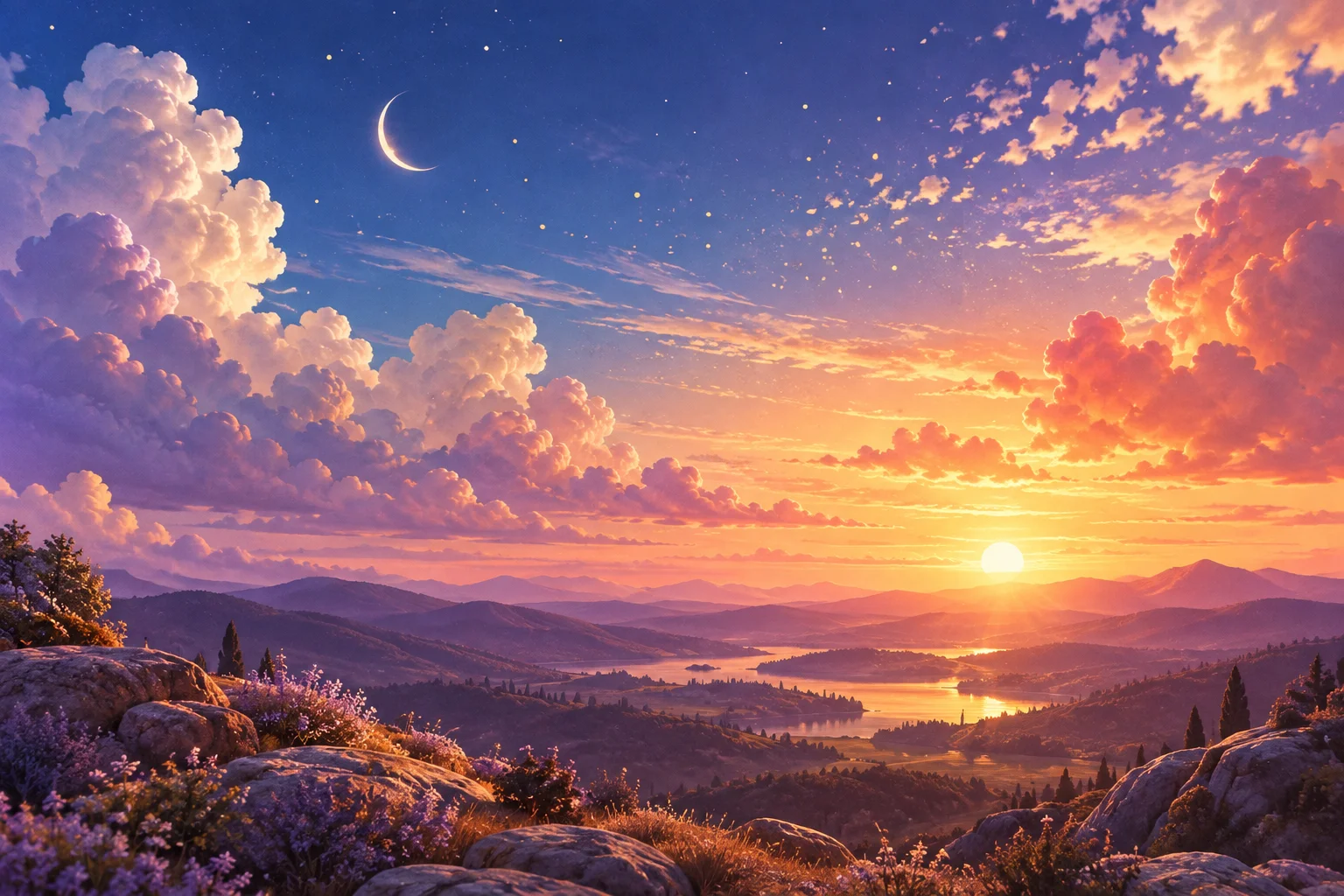
The sky can change its entire colour palette without changing the Sun. The secret is what happens to sunlight on its journey through the air.
White light is a mix
Sunlight may look white, but it contains the colours of the rainbow. Those colours have different wavelengths: blue light has a shorter wavelength than red light. When sunlight reaches Earth, it meets the gases and particles in our atmosphere.
Air sends blue light our way
Air molecules scatter shorter wavelengths more strongly than longer ones. This scattering sends blue light in many directions, so it reaches our eyes from across the sky. The blue above us is light redirected by the atmosphere—not a reflection of the ocean.
Sunset takes the scenic route
When the Sun is low on the horizon, its light travels through more atmosphere before reaching us. More blue light is scattered away from that direct path, leaving warmer reds and yellows. The longer journey helps turn an ordinary evening into a spectacular one.
Look up, then look again
Compare the sky at midday and near sunset. Notice the colours overhead and near the horizon, while keeping your eyes away from the Sun. Clouds, dust and other particles can change what you see, so no two evenings need to look exactly alike.
A thought to take with youWould a longer path through the air make direct sunlight look bluer or warmer?Tap to reveal the answer
Warmer. More blue light is scattered away from the direct path, which helps explain the reds and yellows of a sunset.
Keep your curiosity going
Explore the science behind this story.